
Garage Door Opener Not Working? 10 Common Problems and How to Fix Them
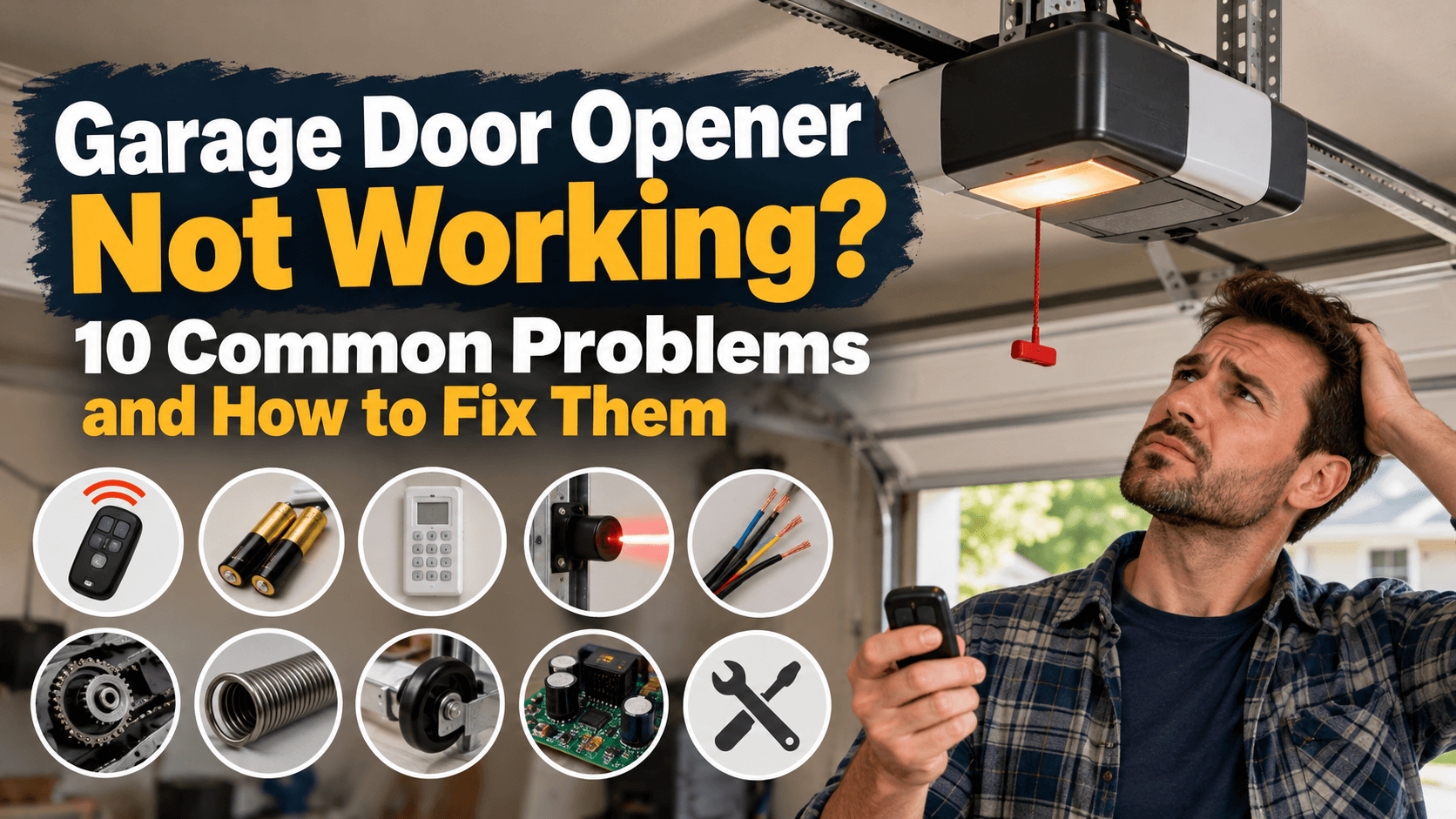
Garage Door Opener Not Working? 10 Common Problems and How to Fix Them
You’re running late, you hit the remote on your way out the door, and… nothing. The garage door just sits there. It’s one of those small failures that throws off an entire morning — and because we use our openers several times a day without a second thought, we rarely know where to start when one stops cooperating. The good news is that many opener problems have simple, safe fixes you can try yourself. The rest are quick work for a technician.
Here are ten of the most common reasons a garage door opener stops working, what’s usually behind each one, and how to get your door moving again.
Start Here: A Few Quick Checks
Before diving into specific problems, rule out the simple stuff — it solves a surprising number of “dead” openers:
- Confirm the opener is plugged in and the outlet has power
- Check that the breaker for the garage hasn’t tripped
- Make sure the wall switch (and any lock/vacation mode) isn’t engaged
- Try both the remote and the wall button to narrow down the cause
10 Common Garage Door Opener Problems & How to Fix Them
1. Dead Remote Batteries
It sounds obvious, but a dead remote battery is the single most common culprit. If the wall button works but the remote doesn’t, start here. Swap in a fresh battery, and if that doesn’t help, the remote itself may need reprogramming or replacing. Our guide on a garage door remote not working walks through the next steps.
2. Misaligned or Dirty Safety Sensors
Those small photo-eye sensors near the floor on each side of the door are a safety feature — if they don’t “see” each other, the door won’t close. If your door opens fine but reverses or won’t shut, check the sensors: wipe the lenses clean, clear any obstructions, and make sure both are aligned and their indicator lights are steady. A gentle nudge back into alignment often does the trick.
3. The Door Is Locked or in Vacation Mode
Many wall consoles have a lock button or “vacation mode” that disables the remotes to prevent unauthorized access. It’s easy to press by accident. If your remotes suddenly stopped working but the wall button is fine, check for a lit “lock” indicator and toggle it off.
4. Remote or Keypad Out of Range or Needs Reprogramming
If your remote only works up close, or your keypad has stopped responding, the signal may be weak or the device may have lost its programming (a power surge can do this). Re-sync the remote or keypad to the opener following your model’s pairing steps. If it still won’t connect, the logic board or receiver may be the issue.
5. The Door Won’t Move But the Motor Runs
If you hear the opener motor humming but the door doesn’t budge, the opener may be disconnected from the door via the manual-release cord, or the trolley/carriage may have failed. Check whether the emergency-release cord has been pulled; re-engaging it is often all that’s needed. If the door still won’t move, stop — forcing it can cause damage.
6. A Broken Spring
Your opener doesn’t do the heavy lifting — the springs do. If a spring breaks, the opener can’t raise the door’s full weight, and you may hear a loud bang when it snaps. This is not a DIY fix: garage door springs are under extreme tension and can cause serious injury. Call a professional for
broken spring repair.
7. A Broken or Frayed Cable
The lift cables work alongside the springs to raise and lower the door safely. A frayed or snapped cable can leave the door crooked, stuck, or dangerous to operate. Like springs, cables are under high tension — leave cable repair to a trained technician.
8. The Door Is Off Track
If the door has jumped its rollers out of the tracks — often after being bumped or due to a worn roller — it can jam, hang unevenly, or refuse to move. Don’t keep operating the opener, as this can worsen the damage. A professional can safely re-seat the door; see our off-track repair service.
9. Worn Gears or a Failing Motor
Over years of use, the plastic drive gears inside an opener can wear out, or the motor can fail. Tell-tale signs include a grinding noise with no movement, or the opener running briefly then quitting. Depending on the age of the unit, this may call for a gear replacement or professional opener repair.
10. The Opener Has Simply Worn Out
Garage door openers don’t last forever. If yours is more than 10 to 15 years old, breaks down repeatedly, is noisy, or lacks modern safety and security features, replacement is often the smarter investment. A new garage door opener runs more quietly, reliably, and securely than an aging unit limping along.
When to Call a Professional
Battery swaps, sensor cleaning, and unlocking the wall console are all safe to try yourself. But some problems should always go to a trained technician — both for your safety and to avoid making things worse:
- Anything involving springs or cables (extremely high tension)
- A door that’s off its tracks or hanging unevenly
- Grinding motors, stripped gears, or electrical faults
- A door that falls, slams, or won’t stay open
- Any situation where the door feels unsafe to operate
A quick safety note: a garage door is the heaviest moving object in most homes, and its springs and cables store enormous tension. Never attempt spring, cable, or off-track repairs yourself — these cause serious injuries every year. When in doubt, step back and call a professional.
Why Choose DoorMaster
A family-run garage door company since 1987, DoorMaster has kept doors moving safely across the GTA and beyond for over three decades. Homeowners choose us for:
- 35+ years of experience as a trusted, family-run company
- Licensed, bonded, and insured technicians
- 24/7 emergency repair with fully stocked dispatch vans
- Top-rated service — highly rated on Google, HomeStars, and Facebook
- Trusted brands including LiftMaster, Chamberlain, Clopay, and more
Still Not Working? We’ll Get Your Door Moving
If the simple fixes didn’t solve it — or the problem involves springs, cables, or the motor — don’t force it. DoorMaster’s licensed technicians offer fast, reliable garage door and opener repair across the GTA, with 24/7 emergency service. Get in touch today.
Call 905-901-5145
| Toll-Free 1-888-808-2696
| Family Run Since 1987 | 24/7 Emergency Service
Frequently Asked Questions
Why won’t my garage door open with the remote but it works with the wall button?
This usually points to the remote rather than the opener. Start with a fresh battery. If that doesn’t help, the remote may need reprogramming, or the wall console’s lock/vacation mode may be switched on, which disables the remotes. Check for a lit “lock” indicator and toggle it off, then try re-syncing the remote.
Why does my garage door start to close then reverse?
The most common cause is the safety sensors near the floor being misaligned, dirty, or blocked. If they can’t “see” each other, the opener reverses the door as a safety measure. Clean the sensor lenses, clear any obstructions, and make sure both are aligned with steady indicator lights. If the problem continues, the sensors or wiring may need professional attention.
Can I fix a broken garage door spring myself?
No. Garage door springs are under extreme tension and are one of the most dangerous parts to work on — attempting a DIY repair causes serious injuries every year. If you suspect a broken spring (the door is very heavy, won’t lift, or you heard a loud bang), stop using the door and call a licensed technician.
How long should a garage door opener last?
With regular use, most garage door openers last around 10 to 15 years. If yours is in that range and breaking down often, running noisily, or lacking modern safety and security features, replacing it is frequently more cost-effective than repeated repairs — and a newer unit is quieter and more secure.
Do you offer emergency garage door opener repair?
Yes. DoorMaster provides 24/7 emergency garage door and opener repair across the GTA and surrounding regions, with fully stocked dispatch vans so most repairs can be completed on the spot. If your door is stuck, unsafe, or won’t secure your home, reach out any time.